







Casino Attached to a Church: Michael Santoli on Speculation, the AI Boom, and Echoes of 2021 and 1999
CNBC’s Senior Markets Commentator—and the show’s first-ever repeat guest—on short selling, AI spending, market concentration, and why the bar is high for what’s been working to keep working.
Episode Overview:
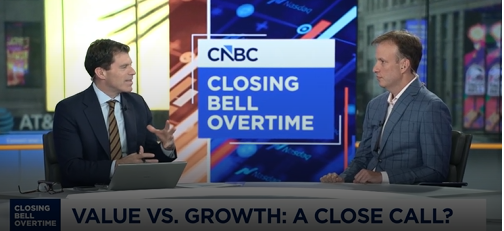
In this episode of The World According to Boyar, Jonathan Boyar welcomes back CNBC Senior Markets Commentator Michael Santoli—the first repeat guest in the show’s history, following his December 2020 appearance in the thick of COVID. Drawing on more than three decades covering Wall Street, Santoli breaks down his now-memorable on-air clash with Ryan Cohen over GameStop’s bid for eBay, the return of meme-stock speculation, and the question hanging over everything: Is this market 2021, 1999, or something genuinely new?
From AI capital spending and extreme market concentration to whether value and equal-weight stocks are finally due to lead, Santoli argues that today’s extremes do not yet match the dot-com peak. But, as he puts it, being told by your doctor that “you’re not literally the most unhealthy patient I’ve had in 30 years” does not mean “you’re in great shape.” It’s a clear-eyed, historically grounded read on the enduring mix of speculation and investment—what Santoli, invoking Buffett, calls “a casino attached to a church.”
Key Topics Covered:
Short sellers and the chilling effect: Why short selling is one of the most treacherous games in investing, the “alpha shorts” many hedge funds use, and why even legitimate short sellers have gone quiet.
The Ryan Cohen/GameStop showdown: The backstory behind a tense, revealing on-air exchange over GameStop’s bid for eBay—and what Santoli believes the Chewy-to-GameStop record reveals.
2021, 1999, or both? The retail-trader empowerment of 2021, the narrow-leadership echoes of the dot-com peak, and Santoli’s “unhealthy patient” analogy for today’s market froth.
AI spending and the hardware food chain: Why Santoli suspects the AI hardware complex may be overearning—and whether greater efficiency could eventually undermine today’s hardware economics.
Market concentration, reconsidered: Why a top-heavy S&P 500 may matter less than people fear—and how the bull case quietly shifted from “asset-light cash machines” to “asset-heavy, invest now, reap later.”
Will value and equal weight finally lead? Why durable rotations do not happen “at a full gallop,” and what the October-to-February broadening did—and did not—prove.
Why he doesn’t pick stocks: How being restricted from owning individual securities became “liberating,” his “voluntary tax on the arrogant” take on sports betting, and his philosophy of staying involved while keeping expectations in check.
The evolution of his CNBC role: From appearing on CNBC as a Barron’s contributor to becoming a market “color commentator” and co-anchor of Closing Bell: Overtime—and where financial media is heading as the business shifts toward digital.
The underreported story: The slow-moving demographic and global-population shifts—and the possibility that the Iran episode accelerates investment in renewables—that Santoli believes investors may be overlooking.
About Michael Santoli:
Michael Santoli is co-anchor of CNBC’s Closing Bell: Overtime and the network’s Senior Markets Commentator, with more than three decades of experience covering Wall Street. He began his career at Investment Dealers’ Digest before moving to Dow Jones Newswires. He later spent 15 years as a columnist and feature writer at Barron’s, where he wrote the Streetwise column, and was a Senior Columnist at Yahoo Finance before joining CNBC in 2015. A graduate of Wesleyan University, he lives in New York City.
Transcript of the Interview With Michael Santoli
Jonathan Boyar (00:00):
The following is provided by Boyar's Intrinsic Value Research and is for general informational purposes only and should not be construed as investment advice. Any opinions expressed herein represent current opinions of Boyar Research only. Boyar Research assumes no obligation to update or revise such information. Investing in securities involves risk, including the possible loss of principle. Past performance does not guarantee future results. Employees of Boyar Research or clients of an affiliate may own shares in any company discussed.
Michael Santoli (00:27):
In specific elements, obviously we have a hyper-concentrated market. Tech is eating the rest of the index. You definitely have narrow leadership momentum upon momentum, discarding of defensive and quote boring stocks. It's all happening, not to the degree it did back then. But I think the point is not to say we're not there yet because nothing says you get there again. I've been joking earlier this week that to say that the extremes and mispricing’s today and the public frothiness today does not match where it was at the peak in 99 and 2000 is just like your doctor saying you're not literally the most unhealthy patient I've had in 30 years. It doesn't mean you're in great shape and you don't have any risk. So I think you can say the bar is high for stuff that's been working to keep working.
Jonathan Boyar (01:24):
Welcome to The World According To Boyar, where we bring top investors, bestselling authors, and market newsmakers to show you the smartest ways to uncover value in the stock market. I'm your host, Jonathan Boyar. Today's guest is a special one familiar to anyone who regularly watches CNBC. Michael Santoli is the first repeat guest in the history of The World According to Boyar. He joined us back in December of 2020 in the thick of COVID and a lot has happened since. Michael has spent more than three decades covering markets. He began his career at Investment Dealers Digest, went on to cover the securities industry at Dow Jones Newswires, spent 15 years at Barron's where I was a regular reader of his Streetwise column. He then moved to Yahoo Finance before joining CNBC, where he's now senior markets commentator and co-anchor of Closing Bell over time. Michael, welcome back.
Michael Santoli (02:17):
Oh, it's great to be back. John, I guess I'll inaugurate the Two Timers Club or something.
Jonathan Boyar (02:22):
I'm super excited that you're here, especially after we spoke at Berkshire. There's certainly a lot to say. I just want to really just start with something that happened earlier this week. It's literally in your wheelhouse when LA jury convicted Andrew left of Citrin research of 13 counts of fraud. Prosecutors allege he made about 16 to 20 million going on TV and social media recommending positions and then quietly traded the other way. He says no one proved he lied and he'll appeal. The sentencing's in August and he's looking at some serious time. He was a frequent guest on CNBC. What do you make of him in the verdict?
Michael Santoli (02:58):
It's pretty striking. I mean, I think the backdrop is, as you know, there's always been a bit of a double standard about long investors versus short sellers. Short sellers are villainized and they're suspected of manipulation even when they're not attempting to manipulate. So I think a lot of this particular case hinged on the way certain messages, private messages that Lefthead put out there to suggest that he maybe had some awareness of the impact of what he was saying about his positions and then whether he was exiting them or trading the other way incrementally off of that. I would almost say it would have a chilling effect, but I think it's already been chilled. I don't think shorts like to talk about their positions with a few very notable exceptions anymore. And I think it's a little bit potentially a net negative for the whole investing ecosystem in the general sense that short sellers to the degree they bring and studies have shown this, bring new information into the market and aid in more efficient pricing and exposure of frauds, that seems to be something that is valuable at least to have as part of the mix.
(04:14):
Now, the letter of the law, I mean, obviously a jury can be persuaded if they're not that familiar with how things work, that this was nefarious. And honestly, he may have overstepped. I know that sometimes over the years, if we have a mutual fund manager or somebody at a big firm, they will say, even if they're willing to talk individual stocks, let me check to make sure we're not buying this or selling this at the moment when we're talking about it. So there are best practices around this stuff where you might want to stay away from this idea, but I just think the bigger point about short sellers, people feeling as if they're somehow misbehaving even when they're doing what they're supposed to do is probably not great. I've just had this dinner with a bunch of hedge fund managers who play long, short, and they just talk about how treacherous it is to be on the short side.
(05:07):
The world is stacked against you already. The world is net long. Markets go up over time. It's very difficult to do this sharpshooter. We're going to get the number right and the stock reaction right and expose the fraud or whatever it's going to be. And so most, I think hedge fund managers do what they call alpha shorts, which basically means, oh, we're just using this short against our more favored position sector to modulate our exposure and maybe have a little participation in that underperformance versus the market. So it's a bit of a shame now. Andrew liked to be a bit of a cowboy and he liked to get a lot of attention. I think when you do prove that you have direct influence over how stocks trade based on your commentary, then you have to recognize that that's a power you want to use wisely and not go into the gray areas in terms of how you behave off of it.
Jonathan Boyar (05:58):
Where does that gray area end? Someone comes more on the long side on CNBC, they tout Uber, whatever it is, noth material changes except the stock goes up a little bit. Ethically, as someone who brings guests on on CNBC, what would you expect in that situation?
Michael Santoli (06:15):
If it goes up a little bit, you'd expect them not to be taking that as an opportunity to blow out of a position. For the most part, that's not the way people behave. I may have mentioned this at some point. I know that this is kind of out there in terms of public research, but when I was at Barron's and then we did the Barron's Roundtable, that was a very strange thing. You recorded over the course of a whole day and then the stock picks and the investment ideas went out published over the course of three weekly issues of the magazine. There's a lot said by a lot of smart professional investors that was in the air somewhere that could be acted upon. Studies showed that those picks kind of outperformed from the day of the recording and underperformed from the day of the publication because somebody thought, "Let's see what we can make with here." It's tricky because you want people to have skin in the game when they talk about an idea.
(07:04):
You want them to have conviction, they want to have money behind it, but the realities are everybody takes profits over time. There is a little bit of inherent self-interest in going on television or going into the media and talking about what you own, whether that's to look smart because you're going to be in the right side of stocks that go in your direction or because maybe in some vague way it aids those positions.
Jonathan Boyar (07:28):
Exactly. In terms of, you mentioned that they're demonized or stigmatized, the short sellers. Why do you think that is? What's the reason? Is it just a misunderstanding of what shorting is?
Michael Santoli (07:39):
I think it's in part a litle bit of a caricaturing of what shorting is that all it is, is basically the common person sees it as somebody benefiting from other people's paint. If you think that investing in general, owning assets in general is kind of a positive sum game in the most broad sense because over time markets appreciate and everyone can participate. Shorting seems a little more zero sum. And I think the natural loss aversion of investors, especially individual investors trying to pick individual stocks or owning individual stocks, they kind of take it personally when someone denigrates them and then it goes against them and the loss aversion is just so extreme that they want to look for a culprit. They want to explain it away as somebody else's misdeeds rather than, "I picked a bad one." That's largely what it is now. It also seems self-serving for, for example, some company managements to go out and scapegoat short sellers or explicitly try to target them and go after them.
(08:42):
That's another reason that I think it's treacherous to short. I think hedge funds are at war on this all the time. Hedge funds think somebody else's short position is their potential alpha. You can get in there and see if you can trigger a squeeze, not even saying that that's illegitimate, it just happens. That's mostly what it is. They're seen as a little bit of the vultures in the market and the idea that it's a good thing when some stocks go down or go to zero is probably hard to stomach for investors that are trying to fix stocks that go up.
Jonathan Boyar (09:15):
If you could get more legitimate shorts to go on CNBC, do you think that would make good television?
Michael Santoli (09:21):
It definitely would. There's a couple of business models built around this. Some people who have essentially a research service or a newsletter that specializes in short selling and they will publicize it having said they've already taken the short position and then they're happy to come on and talk about it. So dedicated shorts that are looking to spotlight their positions, do some of that, but I think that's less valuable than investors who are long short and do both types of things and can be cogent about why they think and it doesn't even have ... I mean, obviously most of them are not going to be accounting fraud or something else that means their company should go away or the stocks should go to zero. It's much more about, look, we think expectations are way too high for this particular area. They're going to miss numbers for X, Y, Z.
(10:09):
The balance sheet's not what we thought it was, whatever it might be. I think there's a lot of value in just conveying to our viewers and readers how smart investors think about these things and how you can slide along the range of probabilities that are inherent in every investing decision from, wow, this is really asymmetric in favor of owning this thing and there's a massive unearned discount in this stock to its price for perfection. Here are the three catalysts that are going to take it down. I think that those things do have value, although I hate to say it, but I understand people's shyness about coming on to do that.
Jonathan Boyar (10:49):
You mentioned the wow factor and speaking of wow, I think it was last month, you had probably one of the most memorable exchanges I've seen on CNBC in a while. Ryan Cohn, who's certainly a character chur, came on to defend GameStop's bid for eBay when you pressed him on it, whether he could actually grow a mature business, which was entirely fair. Chewy is very different than eBay. He fired back. Didn't you guys call for game stocks demise?
Michael Santoli (11:18):
Yes.
Jonathan Boyar (11:19):
What was that exchange like?
Michael Santoli (11:21):
Well, it started off quite awkwardly because he clearly didn't want to be there and was hostile to the process and to us. It was uncomfortable but telling in that he simply views his job as an investor and a CEO as one of me warfare and trolling the supposed establishment. And that's kind of the position he wanted to stay in. Now, what's funny is I personally had never said GameStop should go away and is worthless. What of course I and almost everyone else did is say it makes no sense that this stock went up hundreds of percent on nothing but whispers. And what I did want to bring it back to because of the eBay bid that he had just put on the table, which he put out there as I will be CEO of the combined company and I have this long track record of improving consumer businesses, is to suggest that having co-founded Chewy, obviously a great idea, but it was a great idea that all they did was consume capital up to the moment where they sold it to private equity for $300 million.
(12:26):
And then he takes over GameStop, which is a business and secular decline and he says he made it run more efficiently. Well, that's true. Over the last five years, I think that revenues are down 38% and SG&A expense is now 45%. So he just sort of got costs faster than the revenue was melting away. And as it happens, I know they just reported an upside surprise to earnings on some weird items, but I want to just kind of highlight that. I mean, it was just to me having covered M&A and corporate stuff in general, it was such an easy no from eBay that you had to kind of get at what's really going on here and he clearly wants to just run eBay. GameStop is largely collectibles business. He seems kind of into that and this was a weird Trojan horse method of trying to do that.
(13:12):
I kind of am amused by even some of the other side elements of this, which is that I think it was even too late for him to wage a proxy fight in time for the next annual meeting and everything else. So it's kind of just dying out of the line, even though he added to the position in eBay, GameStop's position in eBay. In a funny way, it was awkward, but also absolutely something that you relish when you're doing one of those interviews because sometimes you really want that tension in order to move things forward and to heighten the back and forth. That was quite fascinating. It's an interesting test in general of what's going on today in the markets because so many things today are kind of looking like 2021, out of the retail stampede into the same kinds of stocks, the space sector, quantum compute, whatever it is.
(14:03):
And it's the same kind of meme and flip pile into call options. All of a sudden's going on there. GameStop shares are not a participant in. It's not actually literally the same tickers that were being taken up last time. Of course, last time it was a lot of crypto, crypto's on the outs. Now it was sort of almost from Cohen seeming he almost wanted to reach back to grab some of that narrative power that he had from a few years ago and for now it doesn't see like there's much of it there.
Jonathan Boyar (14:32):
You just made the observation, is this like 2021? So is it like 2021? Is it like 1999 or can you not make either of those parallels?
Michael Santoli (14:41):
I think there are elements of all of that. I mean, I think the 2021 part is the retail trader feeling hyper-empowered. The idea that the sort of Robinhood complex being weirdly intermingled with sports betting and prediction markets has blurred the lines between pure betting speculation and considered investing. I don't see this really in a scolding way. There's always been this element of the markets. You and I were in Omaha. I love Buffett's thing about the markets are a casino attached to a church and they always kind of have been. And in fact, I always say, I'm sitting in New York Stock Exchange right now. The short-term speculative element is a lot closer to the origins of what created this place than, oh, we are here to provide capital for the growth of industry and capitalism. I mean, yeah, it all happens, but for the most part, there's a short-term greed element that facilitates it.
(15:38):
So I do think you have 2021 in that respect. The do- it-yourself trader is very emboldened right now. The parts of the market that have moved the fastest and farthest just keep reinforcing people's confidence that it's going to keep working. And so obviously we know that doesn't last forever, but high beta, high momentum, semis, all that stuff is working. What I find fascinating this time around too is this theme has carried far enough that these kind of step function stock moves and response to results like Hulupack and Enterprise is following the path of Dell, which follows the path of Micron. The mania is going down the value chain and back in time to grab at the oldest names that have just been sitting there doing their thing because that's how much spend there is out there. And I think that that creates its own muscle memory among traders and it goes.
(16:31):
Now 99, I think it's always the year that's invoked with awe and fear. In specific elements, obviously we have a hyperconcentrated market. Tech is eating the rest of the index. You definitely have narrow leadership momentum upon momentum, discarding of defensive "boring stocks." It's all happening, not to the degree it did back then, but I think the point is not to say we're not there yet because nothing says you get there again. I've been joking earlier this week that to say that the extremes and mispricings today and the public frothiness today does not match where it was at the peak in 99 and 2000 is just like your doctor saying, you're not literally the most unhealthy patient I've had in 30 years. It doesn't mean you're in great shape and you don't have any risks. So I think you can say the bar is high for stuff that's been working to keep working.
(17:32):
I am a little bit unnerved by sometimes the rhythms of the market and how it does seem ... Everything you look at in terms of people paying up for call option premium upside exposure versus downside, super extreme, definitely yellow flag. Everything you look at with regard to some of the volatility dynamics, like all this stuff, the correlations are super low right now, which is good until it's really bad. All that stuff sets the scene. Now everyone will say, well, earnings are up even more than stocks, even when the S&P in elastics. And that's true, but the earnings growth is also really narrow and I can't escape the idea that somehow the hardware AI food chain is overearning or projected to keep over earning. I just can't see that we're going to allow the profits to accrue in that direction indefinitely even if this all works out to be great high return investment.
(18:24):
So I see the makings of it. I always point out in 1999, there were 500 plus IPOs. On average, they doubled on day one and now we have a hundred IPOs packed into one on the next week in a way.
Jonathan Boyar (18:39):
You have Anthropic, you have open AI, you have obviously SpaceX right away in the next week or two. You're a student of market history and obviously there's big rotation shifts. Could this be a shift towards equal weight? Could this be the catalyst that finally gets that to equal eight actually getting a bid or not really?
Michael Santoli (18:59):
It would require a couple steps down the line. One of my strongly held beliefs is that those transitions don't happen at a full gallup. The leadership part of this market probably has to really get pounded and people think that it's over severe correction for an enduring transition toward equal weight to take hold, I think that would match the 2000 experience. And I keep saying it's much more extreme than I think just by on measure, it's like 50 to 60% of stocks are like above their 200 day average now or whatever, which is weak for a market at all time highs, but it was more like under 30% at the peak in 2000. So things couldn't further trend in that direction. I do think that we saw a litle bit of a glimpse of this from October through February of this year. We saw a bit of a climax in Mag7 leadership into October.
(19:54):
I was a little bit of a rethink about AI spend, whatever the catalyst was. And you did genuinely see a broadening out into more cyclical parts of the market, value leads, equal weight leads. And it was pretty pronounced for four months while the S&P did nothing, went sideways at best. I think that's best case scenario, but then it quickly reversed and all you needed was a little bit of a macro shock to reset things. All of a sudden tech looks defensive again and there's enough doubts about consumer and whatever and financials that the old muscle memory kicks in and it's all AI. So I do think that we're setting up for a big snapback in longer term relative returns, but I always say equally did fine. It held its value in the early 2000s, but it didn't race ahead. It was not perfectly immune to the undertone.
(20:46):
And of course you had a recession, you had all kinds of accounting scandals, nine eleven, the whole bit. So it wasn't just a valuation reset, but I do suppose you could. A lot of stuff seems so discarded. Who has a nice word to say about boring consumer staples, but they're just for sale every day and they're making 30 year lows, some of these food stocks That rhymes that type of an environment. And I think what's interesting about the crowding into the winners is it's almost willing. People are aware they're crowding into it. If I chase earnings revisions, if I buy momentum, even quality gets you there into that area. It's treacherous once it breaks, but obviously we don't know where that might happen.
Jonathan Boyar (21:26):
Before we continue, if you're enjoying this conversation, I'd encourage you to subscribe to our Substack at oyerresearch.substack.com. That's where we share some of our research, all of our interviews and our thoughts on investing. Now back to the conversation. They're crowding into the winners and then that makes people say, "Oh, the index concentration is whatever." The top 10 stocks are 38% or whatever it is. You go to South Korea, there are two stocks that are like 43%, so it could get a lot worse. But is that one of the things that people just say and it just really means nothing? Does it really matter?
Michael Santoli (22:02):
I don't think it matters in a particularly tangible way. I think you could even go back to the US in the 50s, you had something similar where it would be like GM, IBM and AT&T, whatever. I do think what it does is it does create a lot of these statistical anomalies that people like me sees on and now our job is to figure out whether those have relevance or not. So there's all these streaks. I think the S&P was up nine straight days, eight of those days had negative breadth, more stocks down that up. Well, sure, mathematically that can now happen quite easily because everything is downstream of the concentration. NVIDIA has a larger weighting than industrials and healthcare as sectors. Consumer discretionary excluding Amazon and Tesla is like less than 5% of the S&P. So I think what it really changes is how we interpret what the market message is when it does a certain thing.
(23:01):
I don't mean the market's not the economy, but the S&P 500 is not principally tracking the fortunes or the household experience of this domestic economy right now. It's not structurally designed to do so at the moment. Now it's funny that that observation allows people to say, well, that's why it's okay that either it's A, concentrated or has elevated valuation. But I find it fascinating how the story behind that has changed. Two years ago, if you say, "Oh, the NASDAQ 100, it's pushing 30 times forward earnings, that seems a little rich." And you'd hear people like strategists on Wall Street say, "Oh yes, but you don't understand. All the earnings are free cashflow. These are massively high return on capital businesses. They grow effortlessly. It's network effects. They're kind of quasi-monopolies. It's perfect. That demands a premium." Or they buy back a ton of stock. That was another piece.
(23:55):
Flash forward to now, they have no free cash flow because they're willingly burning it on AI CapEx. They're not buying back much stock at all if any. And in fact, Google just did an equity raise of $85 billion even though they have cashflow resources to cover what they think they need and have been borrowing pretty heavily. We can go from asset light free cashflow machines to real asset heavy invest now maybe reap later type of a scenario and still we're kind of tolerating similar valuations similar, maybe not the same in every respect. I think it's bullish that there's been a lot of divergence even within mega cap tech with things like Microsoft doing so badly and such. So it's not purely blind, irrational by the big guys, but it's amusing how what we thought were causes of a certain phenomenon proved not to be. Similar in 2021, we talk about the meme stock mania and that huge run in the NASDAQ and low quality stocks and everything else, everyone's like, "Well, that's because rates are at zero.
(25:01):
Rates are at zero and the Fed and it's like, well, real rates are much higher now. We're certainly not near zero and you have the exact same degree of outperformance from nonprofitable tech stocks today.
Jonathan Boyar (25:12):
The market obviously now is extremely interesting. There's tons of different narratives, tons of different stories that's going through, whether it's AI, spending, GLP-1s, whatever it is that's disrupting healthcare. Is there a narrative now that's going on that Wall Street is almost treating as gospel that you think two, three, four years from now, people are going to look really silly? I
Michael Santoli (25:35):
Think it has to just be that these bottlenecks and shortages in all kinds of computing hardware are durable and are worth paying up for. I've presented this intentionally as a naive question, but when we first got into all this and the best companies in the world decides what they need to do with their money is to build massive buildings in the desert and give NVIDIA 80% margins for the equipment that goes into it, if those are the table stakes right now for doing it this way, why are the smartest people in tech not trying to figure out if there's a way to do it with more compression, with les brute force computing power, lower energy, whatever it might be. I guess this would be kind of how Chinese AI companies are attempting to do it, but for me, it feels like work harder, not smarter.
(26:30):
Every time you say that, investors are like, "You don't understand. These guys, as soon as they build the capacity, it's sold out. So therefore it's perfectly rational, whereas the fiber optic build out in the '90s was like 1% lit once it got live or whatever it is. " Okay, I'm sure that's true, but I still don't see how that doesn't bring us to a point where the real opportunity is doing it in a more efficient way. And I think people understand that, but again, at the same hedge fund dinner, I had somebody say, right now the street thinks Micron's earnings based on this cycle, if it's a cycle, are going to peak in fiscal 2028 or something like that. Could it be fiscal 2027? And in which case, what happens in stock? A stock that, by the way, usually peaks at like six or seven times earnings because that's peak earnings.
(27:16):
Everyone was like, not relevant. We don't have to worry about that. It's funny because as much as I say, don't be confident this is 99 and 2000, but there are these nice echoes such as back then when old fashioned phone companies became sexy because it's all about connectivity and wires and Nortel and Lucent and all this stuff all of a sudden you're paying high valuations for them because they were showing an amazing stretch of growth. I think that's probably one of the things that I think has a high probability of us looking back and saying, "What were we thinking there?" What I find fascinating, you mentioned GLP-1s, it feels like almost every sector has a kind of winner take most dynamic involved with it or they command nearly a hundred percent of the attention from investors and so a lot of other stuff falls by the wayside.
(28:08):
Hard for me to make the case that that's outright wrong, but I do find it kind of interesting. What I also find interesting is everyone keeps talking about how they themselves as investors are making use of whatever AI tools they can to try and refine their processes and help decision making and everything else. To me, that's to be expected and I'm sure it's going to be helpful, but all it does is kind of reset everybody to a similar level. There was a time when having the fastest cable to the stock exchange was alpha and everybody got it.
Jonathan Boyar (28:42):
It goes back to the Rothschilds with their carrier pigeons or whatever they used. Everyone wants an edge.
Michael Santoli (28:48):
Exactly. And understandable, that's what makes the market work and go forward, but maybe that's a comforting message in the sense that it still requires some level of discretion or really even just the behavioral principles, just sort of how you should try and surf these cycles.
Jonathan Boyar (29:07):
You obviously have a huge depth of market knowledge, insight and history. Are you allowed to invest?
Michael Santoli (29:14):
Not in individual securities, no. So it pretty much locks us into ETFs and longer term type stuff. Interestingly, I think-
Jonathan Boyar (29:24):
And Versen.
Michael Santoli (29:25):
And Versant, of course, yes. What's funny is I guess crypto ended up being okay because it was sort of a considered a currency. I've never been tempted, however, to do that. To be candid, I almost take that as a liberating element. Partly it's my temperament. I don't really feel like I would want to be very self-directed or opportunistic in trying to pick individual stocks. I certainly can observe people I think are good at it and maybe would put money with them, but the more I learn about the market and get familiar with The cadences and how tough it is, the less confidence I have that I would be particularly great at it. Why make the effort? I have a similar view. I mean, as much of a sports fan as I am, I'm just not tempted to bet. Maybe it's because if you have too much of a rational understanding of probabilities, takes you out of it.
(30:19):
I can't submit to the illusion that I'm going to pay. And now if it's fun, if it's consumption, if it's just entertainment, it's fine. But I said on the air to one of my colleagues that I consider sports betting a voluntary tax on the arrogant. I wouldn't put investing in those terms, but-
Jonathan Boyar (30:35):
And I've done very well in sports betting and I know nothing about sports. So that's what it showed. Has all of your experience made you think that the market's efficient and you're better off putting this into a long-term Vanguard type fund?
Michael Santoli (30:47):
I wouldn't say efficient in the sense that I think the market always arrives at the correct price. I'm definitely in the inefficient in unpredictable and non-replicable ways or ways that have enough randomness in them that they're very hard to exploit systematic. I mean, I know that there are some systematic investors who can do it who seem to be able to do it and just exploiting these anomalies and things like that. My guiding mode always, and I say this sometimes, is stay involved but keep expectations in check. Have an awareness of the long-term tendencies, the probabilities, how you should respond to particular events or shocks. And then if you keep expectations in check, probably means you're just going to do more savings so you don't expect the market to do your saving for you. Maybe just not think that this is a quick route to life-changing circumstances.
Jonathan Boyar (31:47):
I know we're brushing up on time, but your role at CNBC has changed a lot over the years. How has it evolved? Where do you see it going and what are the differences?
Michael Santoli (31:57):
It's funny because I've been in the CNBC orbit even before having come here to work full-time for decades. So I was always a bit of a contributor. I would convey the Barron's point of view when I was at Barron's, just come on as a panel guest and things like that. Once I came here in 2015, it was this title senior markets commentator we thought for all of 20 seconds about what the title should be. And the idea was to be a bit of a color commentator like sports color commentary, which is to say not play by play and just here's what's going on, but try and illuminate the action, get somebody to write themes. Exactly. Like Clyde Frazier with less colorful language and clothing. And you know how that is. You're watching the game and it's like, "Oh, I didn't see it that way." Or, "Here's what really was going on in this play." Of course, I always did continue to write a column for mbc.com as well, CBC Pro.
(32:51):
That was analogous to my Barron's columns, kind of a here's where we are scene setter for the markets. I continue to do that to write, to know what I think and frame out your expectations. Now over time, I did take on a little more of a fill in anchor role and we call it Anchor Buddy, the sidekick. What that has helped that is to widen out your aperture to know a lot more about some of the non-market stuff, a lot of corporate type things. Technology, I maintain a broad and shallow understanding and to get to know some personalities and to help with some booking and things like that. So I've just as of January started to be co-host of that 4:00 PM show, Closing Bill Overtime with Melissa Lee. The idea behind that is to try and make it a market post game show, just break down exactly what was happening and how it might continue to impact the story tomorrow.
(33:45):
What's going on now is as everybody is trying to figure out as to how to be more effective and relevant digitally. I think it's known out there that CNBC, we're trying different ways to recast the website and do more, whether it's sort of on the fly reaction video or newsletters or special verticals around wealth and alternative investments and things like that. So I'll continue to refine a presence there and I do feel like that is going to continue to take on more importance and mindshare. But it's interesting because the fact that we're built as a 13 hour of li TV a day type of an operation
Jonathan Boyar (34:27):
And it seems like you're there for all 13.
Michael Santoli (34:29):
Not quite, but I like to see the span of a day and how it evolves. That's just old habit. I do think that the apparatus that was built here and pulling together so much in the way of resource and statistical understanding of what's happening and reporting resources and all that stuff, it just creates the platform for being able to convey that however people want to get it. Obviously digitally is more so and you know well, right? The media business, the cable industry is what it is. You have to continue to fit yourself to what the overall size of the platform is.
Jonathan Boyar (35:07):
Do you enjoy the anchor or the reporting job more?
Michael Santoli (35:11):
The anchor job when it's a show that I do every day and therefore have a role in steering, I do enjoy. But the way I treat the anchor job is a little bit less pure. I am the voice of God host reading the teleprompter. Ideally it creates just a lot of more impromptu back and forth conversation between Melissa and me and the guests and everything else and have a little more commentary around the edges rather than just the presenter piece of it, which I think is a good fit.
Jonathan Boyar (35:44):
One last question. NBC reports on a ton of things, you report on a ton of things, but what's the one story out there that's not being reported on that you think is super important for investors or being underreported?
Michael Santoli (35:56):
Yeah, under reported. There's a lot of slow moving things that I'm fascinated by demographically. I've heard the case made that AI is an option in the United States, but it's going to be a necessity in South Korea and Japan because of demographic reasons. I think we maybe underappreciate some of the global flows related to all of that. It's funny, you mentioned the South Korea stock market, two stocks running the whole thing. And there's a great news story this week that the taxes that Samsung and SK Hyneks will pay this year will be equivalent to half of the national debt of South Korea. So I do think some of that stuff, I don't know how to put it into a package where it's like, "Oh, here's what to monitor right now." But I do think that's fascinating. I'm not particularly big on labor displacement as a theme, but only because I feel like other people are worrying about it for me.
(36:51):
In the US, I always say, even today, nobody needs me to be telling them what's happening in the market, but somehow there's a desire to have humans do it. And the NFL doesn't need to exist, but it does. So I'm not too concerned about all those things. And I feel almost the same way when it comes to the US fiscal situation, meaning that so many people are worried about it, that I'm giving myself permission to not make it a day-to-day concern. I know that's an unsatisfying answer, but I do think it's something about global population dynamics that are going to interact with economies and markets in unpredictable ways. Right now, smaller thing that's going on and I think we're going to come out of this Iran episode being startled at how much of an accelerant it's been for renewables and how that could happen a lot faster.
(37:44):
And I don't even think to the exclusion of fossil fuel consumption, but just we need to have a backup here. I know a lot of smart investors who are saying that's now where they are spending a lot of their attention. That's just a handful of things that I always feel like if I had the time, I would get more deep into those areas.
Jonathan Boyar (38:03):
Michael, thank you for being the first repeat guest of The World According to Boyar. It was a lot of fun talking about comparing today's markets to both 1999 and 2021, talking about your view of the market and many other things. Thank you for being a guest and hopefully you will come back a third time.
Michael Santoli (38:20):
Yeah, my pleasure. I really enjoyed it. Thanks a lot, John.
Jonathan Boyar (38:23):
I want to thank Michael again for coming back on the podcast. I always enjoy speaking with him and I thought this was a great conversation on today's market. The echoes of 1999 and 2021 AI, market concentration, and how investors should be thinking about all of it. If you enjoyed this episode, please follow The World According to Boyar, wherever you get your podcasts. And to receive more of our research, interviews, and thoughts on investing, subscribe to our Substack at boyarresearch.substack.com. Thanks again for listening. Until next time.



About The Boyar Family Of Companies
Boyar Asset Management
We have been managing money since 1983 utilizing our proprietary in-house value-oriented equity strategies. We manage money for high net worth individuals and institutions via separately managed accounts. To find out how we can help you with your money management needs please click here.
Boyar Research
Since 1975 we have been producing independent research on intrinsically undervalued companies across the market capitalization spectrum and in a wide variety of industries using a business person’s approach to stock market investing. To find out how we can help you with your research needs please click here.